Safety Systems That Match Your Design
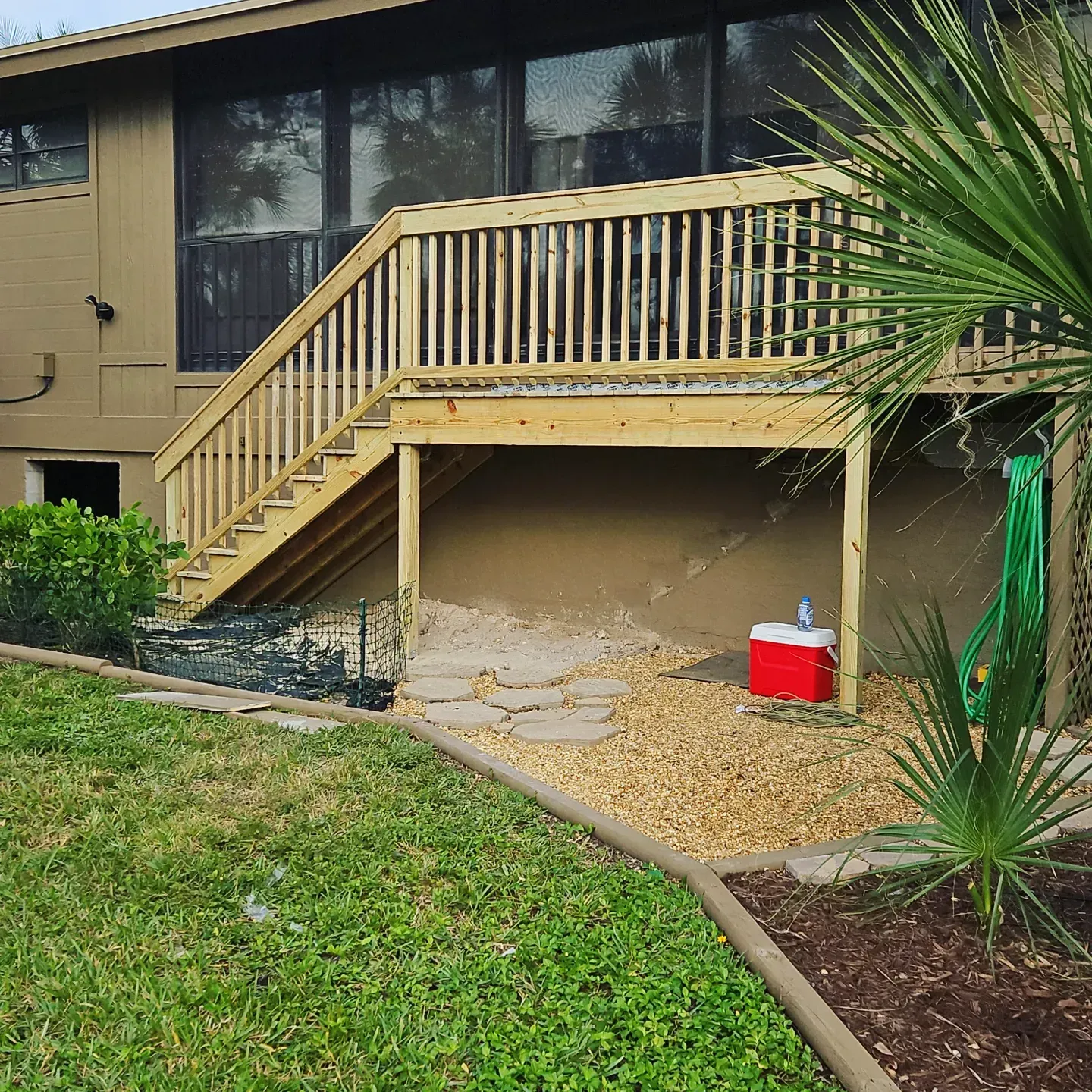
Custom Deck Handrails in Fort Myers for elevated decks requiring code-compliant barriers that withstand coastal wind loads and daily use
Building codes require railings on any deck surface more than thirty inches above grade, with specific regulations governing post spacing, baluster gaps, and the amount of lateral force the system must withstand without failing. Coastal installations face higher wind load requirements than inland locations, which affects post embedment depth and the size of blocking used to anchor railing sections to the deck frame. Hurley Construction Services LLC installs handrail systems engineered to meet Florida Building Code wind zone requirements while offering material and style options that complement the home's exterior rather than appearing as an afterthought bolted onto finished decking.
Custom railing installation involves anchoring posts either to rim joists with through-bolts and backing plates or setting them as extensions of the deck's structural posts, depending on framing configuration and load paths. Baluster spacing must prevent a four-inch sphere from passing through, which determines whether vertical pickets, horizontal cables, or glass panels work for your visibility preferences and maintenance tolerance.
Schedule a consultation to review railing options and verify current code requirements for your deck height and location.
What Changes After Proper Railing Installation
The attachment method determines whether railings stay rigid over time or develop wobble as fasteners loosen from seasonal expansion cycles and daily use. Through-bolted connections with washers on both sides distribute stress across a larger area than lag screws driven into end grain, which prevents the splitting and loosening that compromises safety within a few years.
After installation, you notice that the railing provides firm resistance when leaned against, with no flex or movement at post connections even when force is applied at the top rail. Material choice affects how often you refinish or clean surfaces, with powder-coated aluminum requiring only occasional washing while wood railings need sanding and sealing every few years to prevent splintering and weathering.
Design decisions involve trade-offs between sightlines and privacy, maintenance requirements and upfront cost, and how railing height affects furniture placement near the deck edge. Glass panel systems provide unobstructed views but show salt spray and pollen more readily than open balusters, while cable railings require periodic tensioning to maintain code-compliant spacing as materials settle.
Before installing or replacing railings, homeowners in Fort Myers typically want clarity on code requirements, material longevity, and how design choices affect maintenance.
Common Railing Questions From Property Owners
What railing height is required for deck elevations common in coastal areas?
Decks more than thirty inches above grade require railings at least thirty-six inches tall measured from the deck surface, though many installations use forty-two inch railings for added safety when the drop exceeds five feet.
How do material choices affect how hot railings get in direct sun?
Aluminum and composite materials remain cooler to the touch than steel or dark-stained wood, which matters when railings are used for support while climbing stairs or when children are present.
When should existing railings be upgraded even if they look acceptable?
Railings installed before current wind load standards or those that move more than minimally when pushed should be evaluated for anchor reinforcement or full replacement regardless of cosmetic condition.
Why do some railing posts loosen faster than others?
Posts attached only to fascia boards rather than anchored through to structural framing have less holding power and will work loose as wood shrinks and swells, especially when top-rail sections span between widely spaced posts.
What maintenance do different railing materials require in coastal environments?
Stainless steel and powder-coated aluminum need periodic cleaning but no refinishing, while wood railings require sanding and sealer application every two to three years to prevent UV damage and moisture penetration that leads to splitting.
Hurley Construction Services LLC provides material samples and discusses how different railing systems integrate with your deck layout, stair configuration, and home exterior. Request a project estimate that includes engineered connection details and material specifications for your specific deck height and exposure.